

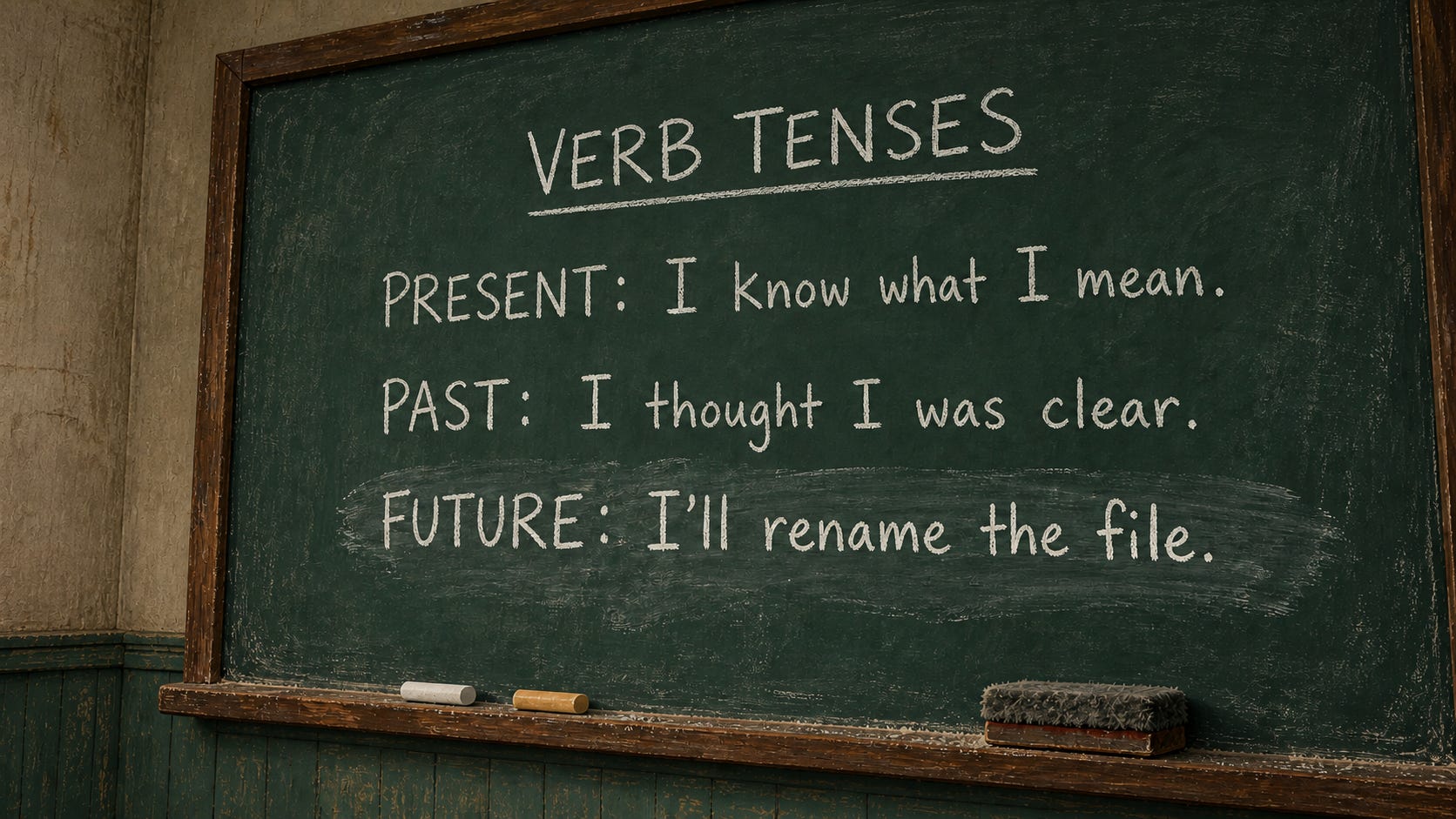
A multilingual chatbot of immigration resources, a breaking news request-for-comment generator, a story draft analyzer that suggests alternatives to loaded language — these are a few of the prototypes students built in our first AI News Innovation Workshop last week.
Over three days, a handful of Newmark J-School students who had done little beyond using an AI chat interface envisioned, built and deployed working news tools, and left with plans to keep refining them. They learned a lot — but not necessarily about coding — and I learned about what matters most when teaching these skills.
Back in June, I wrote about teaching data journalism students to build a Claude skill — a repeatable AI workflow — that backgrounds a company across public records databases and returns a footnoted dossier (everyone did great, btw). My takeaway from that class was that building a repeatable process moves your judgment upstream: the decisions you make while planning matter more than the ones you make while running it.
What I couldn’t have told you then was what upstream judgment actually takes. This workshop is where I found out.
What let the students succeed in this workshop wasn’t learning to code. Everyone used code, but no one read any. What they learned instead was how to communicate about the goals and processes of creating tools with code.
Let’s call it vocabulary and grammar.
Vocabulary is the words for what your tool does — what it reads, in what order, in what form. Grammar is the rules for putting those together so the system actually understands you: which files it reads on its own and which it ignores, what it will act on and what it skips past. Without the vocabulary, you can’t say what’s wrong. Without the grammar, you can say it and have nothing happen.
Which makes this workshop, more than anything, a language class. Vocabulary, grammar, and then three days of tentative, halting speech until it started to stick.
Talking product
Whether they were intended for reporters, editors or audiences, each student tool was a process with inputs and outputs. Package that up and, in tech speak, you have a product — which is why to teach people to build reliable tools with AI, Gina and I wanted to run a workshop focused on product design for news.
It’s also why I teamed up with Andrew Rodriguez Calderon, a computational journalist turned product designer and regenerative technologist, to build a three-day curriculum covering the basics we thought students would need to leave capable of building, and of continuing to learn on their own.
But the lessons that turned out to matter most weren’t the ones we expected. They were about where files live, what things get named, and which files an AI reads on its own versus ignores unless you tell it to look.
Don’t run away. This is the interesting part, I promise.
Andrew and I budgeted a couple of short lectures on that, which we termed “file structure.” But calling it that undersells it.
You can’t skip ahead to choosing the wallpaper and wood finishes for a house before understanding foundations and structural walls. Our file structure lessons weren’t really teaching organization, but rather foundation — the process of defining the framework the students’ projects would live in.
Decisions about where the calls your tool makes live, how you’ll assess whether they’re right, and how to see what the machine did when you weren’t looking — those are the vocabulary and grammar needed to make informed design decisions. If you don’t have those, human approval is mostly agreeing to whatever the machine picked and hoping for the best.
We hadn’t realized how challenging it would be. Working out where things would live was how the students began to understand the shape of what they were building. The lessons took far longer than we expected, but were the biggest breakthrough in the whole workshop.
Before, students were struggling to critique and respond to their AI’s design proposals, unsure what they should be asking. After, they had a sense of control and direction. That’s when the work took off.
In a language class, being misunderstood is the feedback — you say it wrong, someone frowns, you try again. But the AI default is not to frown. LLMs will act on a badly formed request and hand you back something plausible. There’s no automatic feedback about how you could better articulate your ideas or ask follow-up questions.
In a classroom, a stuck student can ask for help and watch a teacher model how to problem solve with the AI — asking for a less technical explanation, requesting alternatives to proposed plans, pushing back on an assumption. After about six hours of building, all our students could do it themselves.
Judgment, as an engineering problem
We had a session planned on judgment and where humans belong in a design process, framed around ethics. By the time we got to it, the students had built enough that the ethical questions were also practical engineering ones.
The big “aha” moment was understanding the different impact of decisions made while you’re building and decisions made while the tool runs — and how you’d know afterward which was which. By the last day, students could see how many decisions their tools were making, and that rather than check them all, they began examining the upstream judgments that dictated how those decisions get made.
Then they deployed, and things got more complicated. Edge cases, bugs, and token costs from handing the machine the same pile of material to read every time. Suddenly they wanted to know about structured data, QA testing, using different models for different steps, and which tasks would be better handled by deterministic code.
It’s not that they learned all those things — three days is very short. It’s that by building and deploying a tool, they hit problems that required new language to solve, and left knowing what to keep learning about and how to dive into it. Which is, in my book, a success.
At the end, they presented their prototypes to J-School faculty, who were impressed. The students could easily have been overwhelmed by everything we threw at them. Instead they left excited to do more (ok, and tired). Two suggested this workshop should be required.
So what are we teaching here anyway?
If I had to reduce it, there were three key skills: How to talk to these systems. How to think in workflows. And enough grasp of structured data to evaluate the design choices an AI makes on your behalf. Without those, you can’t ask the questions that would let you take control, because you don’t have the words for what you’d be asking about.
We ended up teaching mostly principles of product management and software engineering, applied to news. What’s remarkable is that we could take students with no background in those fields — or perhaps even any interest in them — and, through the process of using an LLM to design a tool to solve a newsroom problem, get them ready and eager to learn those concepts. Once they began to grasp the vocabulary and grammar of product design, they could put their inquisitive journalistic minds to use.
How we teach these skills will keep changing as the technology does. Back in June, I was thinking about where judgment sits in a process. Now I’m thinking about the whole method of communication you need in order to execute that judgment.
We surveyed the students after this workshop, and one described it as “like a driver’s license for the age of AI – you might not like cars or might not buy one yourself but they’re everywhere so some basic knowledge about traffic rules will help you navigate your way.”
Like the first semester of a foreign language, a driver’s license does not prove expertise. But both are (hopefully) minimum competence to start navigating a new landscape — and to keep getting better once you’re there.
Andrew has put the class site up on Vercel, including lesson structure, slides, and student projects, for anyone who’d like to see more. Two of our students are continuing this semester as the first Tow-Knight AI News Innovation interns, at Documented and Semafor, with Andrew as their technical advisor. We’ll be running more next internships summer. Write me if your newsroom wants one of the next cohort of interns (which you should).
We also have more teaching coming, including things you could attend: another version of this workshop for the Newmark J-School’s January Academy (open to non-degree students, though enrolled students get priority). And I’m teaching how to make your own company backgrounding workflow at the Hacks/Hackers New York Times AI x Investigative Journalism Forum on September 25.
I guess I teach LLM 101 now. Next semester: irregular verbs.
I loved all your metaphors! There’s probably a poem embedded in this piece. Also one of the best things about good teaching is that the “teacher”—if observant—is learning too. That kind of learning is contagious! Thanks so much for sharing this piece.
PS: did AI create the image at the top ?